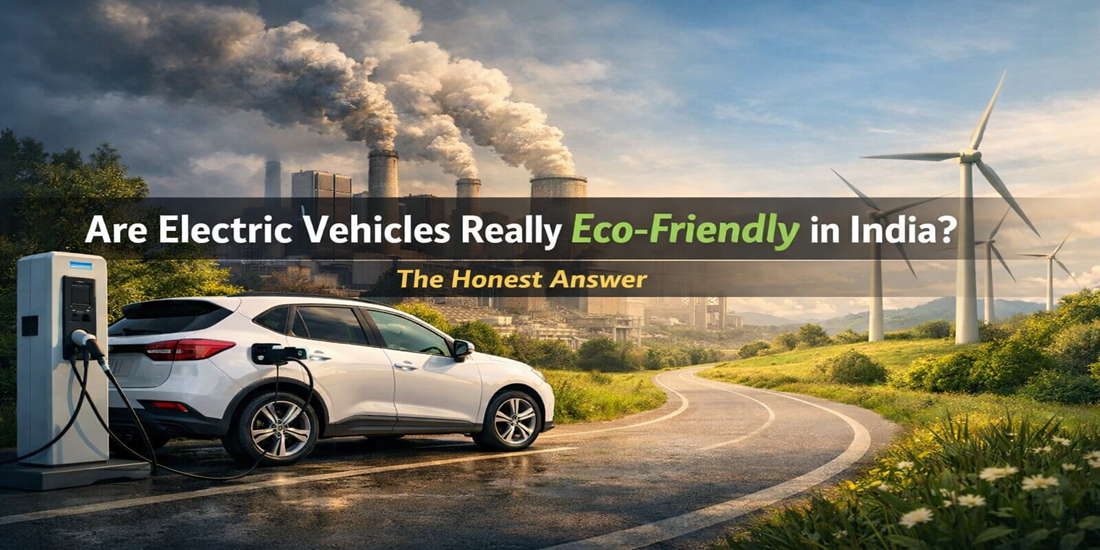
Are electric vehicles eco-friendly in India? This is one of the most debated questions among Indian car buyers today. With concerns about coal-based electricity, battery production, and recycling infrastructure, many people wonder whether EVs genuinely reduce environmental impact or simply shift emissions from roads to power plants. To answer this honestly, we need to evaluate the full lifecycle impact of electric vehicles — not just tailpipe emissions, but manufacturing, electricity generation, and long-term sustainability trends in India. When assessed realistically, electric vehicles are not perfect — but they are significantly cleaner than conventional petrol and diesel vehicles over their lifetime. Zero Tailpipe Emissions: Immediate Urban Impact The most visible environmental benefit of electric vehicles is zero tailpipe emissions. Unlike petrol and diesel cars, EVs do not emit: Carbon dioxide (CO₂) Nitrogen oxides (NOx) Particulate matter (PM2.5 and PM10) Hydrocarbons In Indian cities struggling with poor air quality — such as Delhi, Mumbai, Bengaluru, and Kolkata — eliminating tailpipe emissions has direct health benefits. Vehicular pollution contributes significantly to respiratory illnesses and urban smog. Electric vehicles improve local air quality immediately, especially in traffic-heavy areas where emissions concentrate at street level. Even before considering the electricity source, this localized pollution reduction is environmentally meaningful. What About Coal-Based Electricity in India? A common argument against EVs in India is that much of the country's electricity still comes from coal-fired power plants. While it is true that coal remains a major energy source, this argument misses two key points: Electric vehicles are far more energy-efficient than internal combustion engine vehicles. India’s electricity grid is rapidly transitioning toward renewables. Internal combustion engines waste a large portion of energy as heat. Electric motors, on the other hand, convert a much higher percentage of energy into usable motion. Even when charged using grid electricity that includes coal, EVs generally produce lower total lifecycle emissions compared to petrol vehicles. According to international lifecycle studies and projections from India's energy transition roadmap, EV emissions per kilometre are lower than comparable petrol vehicles — and this gap will continue widening as renewable energy expands. India’s Renewable Energy Expansion Changes the Equation India is one of the fastest-growing renewable energy markets in the world. Under national targets, the country continues expanding: Solar power capacity Wind energy generation Hydropower Green hydrogen initiatives As the grid becomes cleaner, electric vehicles automatically become cleaner without any modification required by the vehicle owner. Petrol vehicles, in contrast, emit the same carbon dioxide throughout their lifespan regardless of improvements in electricity generation. This makes EVs “future-ready” from an environmental standpoint. For a deeper look at the cost side of EV ownership, you can also explore our guide on Is Buying an Electric Vehicle in India Actually Cheaper in the Long Run? Lifecycle Emissions: The Bigger Picture To evaluate eco-friendliness honestly, we must examine lifecycle emissions, which include: Raw material extraction Vehicle manufacturing Battery production Operational use End-of-life disposal or recycling Battery production does involve higher initial carbon emissions compared to manufacturing a petrol car engine. However, this higher production impact is distributed over years of zero tailpipe driving. Most lifecycle analyses show that after several years of use, EVs compensate for their initial production emissions through cleaner operation. In India’s urban driving conditions — which involve frequent idling and stop-and-go traffic — electric vehicles are especially efficient compared to combustion engines that burn fuel inefficiently in traffic congestion. Battery Production and Environmental Concerns Battery manufacturing is often cited as a major environmental drawback. Lithium-ion battery production involves mining and energy-intensive processes. However: Battery energy density continues improving Manufacturing efficiency is increasing Global supply chains are shifting toward cleaner energy More importantly, batteries do not simply become waste after vehicle use. India is actively building battery recycling and second-life infrastructure. Used EV batteries can be repurposed for: Stationary energy storage Backup power systems Grid stabilization solutions This extends battery lifecycle and reduces environmental burden. The Ministry of Environment, Forest and Climate Change has also introduced battery waste management rules to regulate recycling and ensure responsible disposal practices. Urban Health Benefits Cannot Be Ignored Environmental sustainability is not just about carbon emissions; it is also about public health. Air pollution in major Indian cities contributes to: Respiratory diseases Cardiovascular conditions Reduced life expectancy Electric vehicles eliminate tailpipe emissions in densely populated areas. Even if electricity is partially coal-based, shifting emissions away from crowded urban streets to centralized power plants allows for better emission control and regulation. Power plants operate under stricter emission standards compared to millions of individual vehicles operating on roads. This centralized emission management makes pollution mitigation more structured and scalable. Are EVs Perfectly Green? No. Are They Cleaner? Yes. It is important to remain realistic. Electric vehicles are not zero-impact products. They require materials, energy, and infrastructure. However, compared to petrol and diesel vehicles, they represent a substantial improvement in: Urban air quality Lifecycle carbon emissions Energy efficiency Long-term sustainability alignment As India’s renewable energy capacity grows, EVs will continue becoming progressively cleaner without requiring technological changes from vehicle owners. Final Verdict: Are EVs Eco-Friendly in India? The honest answer is this: Electric vehicles are not flawless, but they are meaningfully more eco-friendly than petrol and diesel vehicles in India — especially when viewed through a lifecycle lens. They reduce urban pollution immediately. They become cleaner as the grid becomes greener. And they align with India’s long-term climate and sustainability goals. For environmentally conscious buyers seeking practical improvement rather than perfection, EVs represent a strong step in the right direction. Frequently Asked Questions (FAQs) 1. Are electric vehicles really cleaner if India uses coal power? Yes. Even with coal in the electricity mix, EVs generally produce lower lifecycle emissions due to higher energy efficiency and centralized emission controls. 2. Do EV batteries harm the environment? Battery production has environmental impact, but recycling and second-life applications significantly reduce long-term harm. 3. Will EVs become cleaner in the future? Yes. As India adds more renewable energy to the grid, EV charging emissions automatically decrease. 4. Do EVs reduce city air pollution? Yes. They eliminate tailpipe emissions, improving local air quality in congested urban areas. References Ministry of Power, Government of India – National Electricity Mix Data (2025–2026) Ministry of New and Renewable Energy – Renewable Capacity Expansion Reports Ministry of Environment, Forest and Climate Change – Battery Waste Management Rules Disclaimer Environmental impact assessments depend on electricity mix, driving patterns, battery chemistry, and vehicle model. Emission comparisons are based on publicly available lifecycle research and national energy data projections. Readers are advised to review the latest policy updates and grid data for region-specific analysis.