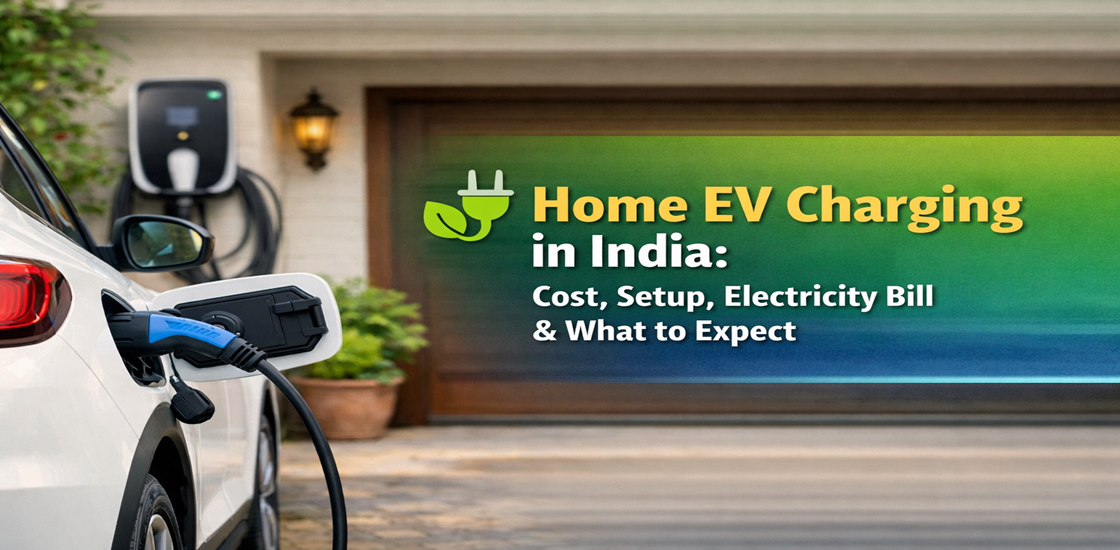
Home EV charging in India forms the backbone of electric vehicle ownership. While public charging infrastructure is expanding across major cities, most electric vehicle users still depend primarily on charging their vehicles at home. For potential buyers, understanding the cost, installation process, and monthly electricity impact of home charging is essential before making the switch. The good news is that home charging is straightforward, predictable, and far more affordable than most people assume. When compared to monthly petrol expenses, the cost difference becomes one of the strongest financial advantages of electric mobility. How Does Home EV Charging Work in India? Home EV charging typically involves installing a dedicated wall-mounted AC charger in your parking space. While some electric vehicles can technically be charged using a standard 15-amp socket, manufacturers usually recommend a dedicated charging unit for safety, efficiency, and faster charging. Once installed, the process is simple. The vehicle is plugged in overnight and charges slowly over several hours. Most Indian urban commuters drive between 20 to 60 kilometres per day, which means overnight charging easily replenishes daily usage without stress. Unlike petrol refuelling, home charging integrates seamlessly into everyday life. There are no fuel station visits, no waiting lines, and no exposure to fluctuating fuel prices. For a broader understanding of charging economics, you can also read our guide on How Much Does It Really Cost to Charge an Electric Vehicle in India? What Is the Cost of Installing a Home EV Charger? The installation cost of a home EV charger in India varies depending on: Distance between meter and parking area Existing wiring condition Electrical load capacity Type of charger selected In independent houses, installation is generally straightforward and may cost between ₹10,000 to ₹25,000 depending on complexity. In apartment complexes, additional coordination with housing societies may be required. Some societies request load approvals or structured wiring plans before installation. In many cases, manufacturers include basic charger installation in the vehicle purchase package, although extended wiring work may involve extra cost. Importantly, this is a one-time setup expense — unlike petrol, which is a recurring monthly cost. How Much Does Home Charging Increase Electricity Bills? This is one of the biggest concerns among first-time EV buyers. An electric vehicle typically consumes around 0.15–0.20 kWh per kilometre. If you drive approximately 1,000 kilometres per month, your total electricity consumption for the vehicle would be around 150–200 units. Residential electricity tariffs in India generally range between ₹6 to ₹9 per unit depending on the state and slab rate. Even at higher slab pricing, monthly charging costs usually remain between ₹1,200 to ₹1,800. Compare this with a petrol vehicle covering the same distance, which may require ₹8,000 to ₹10,000 per month in fuel expenses. Even after factoring electricity slab increases, the difference remains significant. To understand how this contributes to long-term savings, you can explore our detailed breakdown in Is Buying an Electric Vehicle in India Actually Cheaper in the Long Run? How Long Does It Take to Charge an EV at Home? Charging time depends on battery size and charger capacity. Most standard home chargers in India provide slow AC charging designed specifically for overnight use. Charging can take anywhere between 6 to 10 hours depending on battery capacity. For daily commuters, this works perfectly. The car is parked overnight anyway, making charging time practically irrelevant. Additionally, slow charging is generally considered healthier for battery longevity compared to frequent fast charging. Is Home Charging Safe? Modern EV chargers come equipped with multiple safety mechanisms including: Overload protection Temperature control Automatic shutoff systems Proper earthing requirements When installed by certified technicians following manufacturer guidelines, home charging is extremely safe. Most manufacturers also conduct a pre-installation inspection to ensure wiring and load capacity meet safety standards. Can You Use Solar Panels for EV Charging? Yes. Many Indian households are exploring rooftop solar installations to further reduce charging costs. If your solar system generates surplus electricity during the day, that energy can offset charging consumption. Over time, combining rooftop solar with EV ownership can significantly reduce overall energy expenses and increase long-term sustainability. This also aligns with India’s broader renewable energy push under the Ministry of New and Renewable Energy. Is Public Charging Necessary If You Have Home Charging? For most city users, home charging covers 90–95% of daily needs. Public fast charging is typically used only for: Long-distance travel Emergency situations Occasional top-ups Since fast charging costs more per unit, relying primarily on home charging ensures maximum financial benefit. Final Thoughts: Is Home EV Charging Practical in India? Home EV charging in India is not complicated, expensive, or unpredictable. It is a simple, reliable system that fits naturally into daily routines. The modest increase in electricity bills is significantly lower than recurring petrol costs, and the one-time installation expense quickly balances out through fuel savings. For urban professionals, families, and regular commuters, home charging makes electric vehicle ownership both practical and financially sensible. Frequently Asked Questions (FAQs) 1. How much does it cost per month to charge an EV at home in India? For 1,000 km monthly driving, charging usually costs between ₹1,200 to ₹1,800 depending on electricity tariffs. 2. Can I charge my EV using a normal socket? Some EVs allow this, but manufacturers recommend installing a dedicated charger for safety and efficiency. 3. Does home EV charging increase electricity bill significantly? The increase is moderate and typically far lower than monthly petrol expenses. 4. Is overnight charging bad for the battery? No. Slow overnight charging is generally beneficial for battery health. References Ministry of Power, Government of India – Residential Electricity Tariff Data (2025–2026) Indian Oil Corporation – Retail Petrol Price Data (2026) Ministry of New and Renewable Energy – Rooftop Solar Programme Updates Disclaimer All cost figures mentioned are indicative and may vary based on city, electricity slab rate, vehicle model, and driving patterns. Readers are advised to verify local tariffs and manufacturer specifications before making financial decisions.