Daily office commuting is where electric vehicles truly shine in India. Urban cities like Mumbai, Delhi, Bengaluru, and Hyderabad are defined by dense traffic, short travel distances, and constant stop-and-go movement. These are precisely the conditions where electric vehicles (EVs) outperform traditional petrol vehicles in efficiency, comfort, and cost. For working professionals commuting 20–60 kilometres per day, switching to an EV is not just an environmental decision — it is a practical financial upgrade. Lower running costs, minimal maintenance, smoother driving, and the convenience of home charging make EVs increasingly attractive for salaried employees, entrepreneurs, and urban families. This guide explains how to choose the best electric vehicle for office commuting in India, what range you really need, expected charging costs, comfort benefits, and practical ownership considerations. Why Electric Vehicles Are Ideal for City Commuting 1. Stop-and-Go Traffic Efficiency In congested traffic, petrol vehicles waste fuel while idling. EVs, on the other hand, consume power only when moving. Many electric cars and scooters also use regenerative braking, which recovers energy while slowing down — improving overall efficiency. This makes EVs especially effective in metro cities with heavy daily congestion. 2. Lower Daily Running Cost An electric vehicle typically consumes around 0.15–0.20 kWh per kilometre (cars) and even less for electric scooters. If your daily commute is 40 km: Monthly distance (approx.): 1,000 km Electricity consumption: 150–200 units Average residential tariff (₹6–₹9 per unit depending on state electricity boards) Estimated monthly charging cost: ₹1,200 – ₹1,800 By comparison, a petrol car delivering 15 km/litre at ₹100+ per litre would cost ₹6,500–₹8,000 per month for the same commute (based on fuel pricing trends reported by Indian Oil Corporation and other OMCs). For office commuters, that difference directly improves monthly disposable income. 3. Overnight Charging Convenience Most professionals follow predictable schedules. This works perfectly with EV ownership. Instead of: Visiting petrol pumps Standing in queues Adjusting schedules for refuelling EV owners: Plug in at home at night Wake up to a fully charged vehicle This routine convenience becomes one of the most appreciated aspects of EV commuting. How Much Range Do You Actually Need? One of the biggest mistakes first-time buyers make is overestimating range requirements. Typical Indian Office Commute: 20–30 km per day (short urban commute) 40–60 km per day (longer metro commute) Most modern EVs offer: Electric scooters: 80–150 km range Entry-level electric cars: 230–315 km range Premium electric cars: 400+ km range This means many office commuters only need to charge: Once every 2–4 days (cars) Once every 2–3 days (scooters) Range anxiety is far less relevant for predictable daily commuting. Best Electric Vehicle Options for Office Commuters (India 2026) Here are practical and popular choices in the Indian market: 1. Tata Tiago EV Range: ~250–315 km (variant dependent) Ideal for: City professionals and small families Affordable entry into electric car ownership Compact and easy for urban traffic 2. Tata Nexon EV Range: ~325–465 km Ideal for: Professionals wanting more space and highway capability Strong resale and brand trust Higher ground clearance for Indian roads 3. MG Comet EV Range: ~230 km Ideal for: Short city commutes and tight parking spaces Extremely compact and maneuverable Designed specifically for urban mobility 4. Ather 450X Range: ~110–150 km Ideal for: Solo commuters Fast charging options Low maintenance and agile city riding 5. Ola S1 Pro Range: ~120–180 km Ideal for: Tech-friendly urban riders Smart dashboard and connected features Competitive pricing Comfort Advantage in Daily Commute Smooth and Silent Operation Electric vehicles offer: Instant torque No gear shifts No engine vibration Minimal cabin noise In bumper-to-bumper traffic, this dramatically reduces driver fatigue. For professionals commuting five days a week, this comfort difference becomes noticeable within weeks of ownership. Reduced Maintenance Hassle EVs have: No engine oil No clutch Fewer moving parts No exhaust system According to industry comparisons from Society of Indian Automobile Manufacturers, EV maintenance requirements are structurally lower due to simpler drivetrains. This means: Fewer service visits Lower long-term maintenance bills Less downtime Charging Infrastructure in Indian Cities Urban infrastructure is steadily improving. Major cities now have: Public charging stations in malls Office park chargers Highway fast charging corridors Companies like Tata Power and Indian Oil Corporation are actively expanding EV charging networks across metro areas. However, for daily commuters, public charging is usually secondary. Home charging remains the primary method. Insurance and Ownership Costs Insurance premiums for EVs may be slightly higher initially due to battery valuation. However: Government incentives under schemes like FAME India Scheme have supported EV adoption. Several states offer road tax exemptions. Maintenance savings offset insurance differences over time. For long-term commuters (5–7 years ownership), total cost of ownership often favors EVs significantly. Environmental and Workplace Impact Switching to an EV for daily commute also has non-financial benefits: Reduced tailpipe emissions Lower urban pollution contribution Silent driving improves neighbourhood quality As more companies adopt sustainability policies, driving an EV aligns with corporate ESG goals. Professionals increasingly view EV ownership as both practical and responsible. Common Questions (FAQ) Is an EV reliable for daily office use? Yes. Modern EVs are designed for daily city operation. Their simplicity often makes them more reliable than combustion engines for short trips. What if I live in an apartment? Many housing societies now allow: Dedicated charging points Meter-based billing Shared infrastructure Regulatory clarity from state electricity boards has improved installation processes. How often will I need to charge? If commuting 40 km per day: Cars: Every 3–4 days Scooters: Every 2–3 days Are EV batteries safe in Indian heat? Modern EVs include battery management systems that regulate temperature and maintain safe operation under high ambient temperatures. Cost Data Sources Electricity tariff data referenced from state electricity board published slab rates. Fuel pricing trends referenced from publicly available updates by Indian Oil Corporation. Industry maintenance comparisons referenced from sector analysis by Society of Indian Automobile Manufacturers. Important Disclaimer All cost estimates are illustrative and based on average urban usage (1,000 km per month). Electricity tariffs, fuel prices, vehicle efficiency, insurance premiums, and government incentives vary by state and over time. Actual savings depend on individual driving habits, charging method, and ownership duration. Final Verdict: Is an EV the Right Choice for Daily Office Commuting? For predictable, urban, daily travel — electric vehicles are arguably the most practical mobility solution available in India today. They offer: Lower monthly running cost Greater comfort in traffic Reduced maintenance Charging convenience at home Increasing infrastructure support For office commuters driving 20–60 km daily, EV ownership is not just viable — it is financially and practically logical. Thinking About Switching? Before buying: Calculate your daily commute distance Check home charging feasibility Compare total ownership cost over 5 years Explore state EV incentives Making an informed decision today could significantly reduce your commuting expenses for years to come.
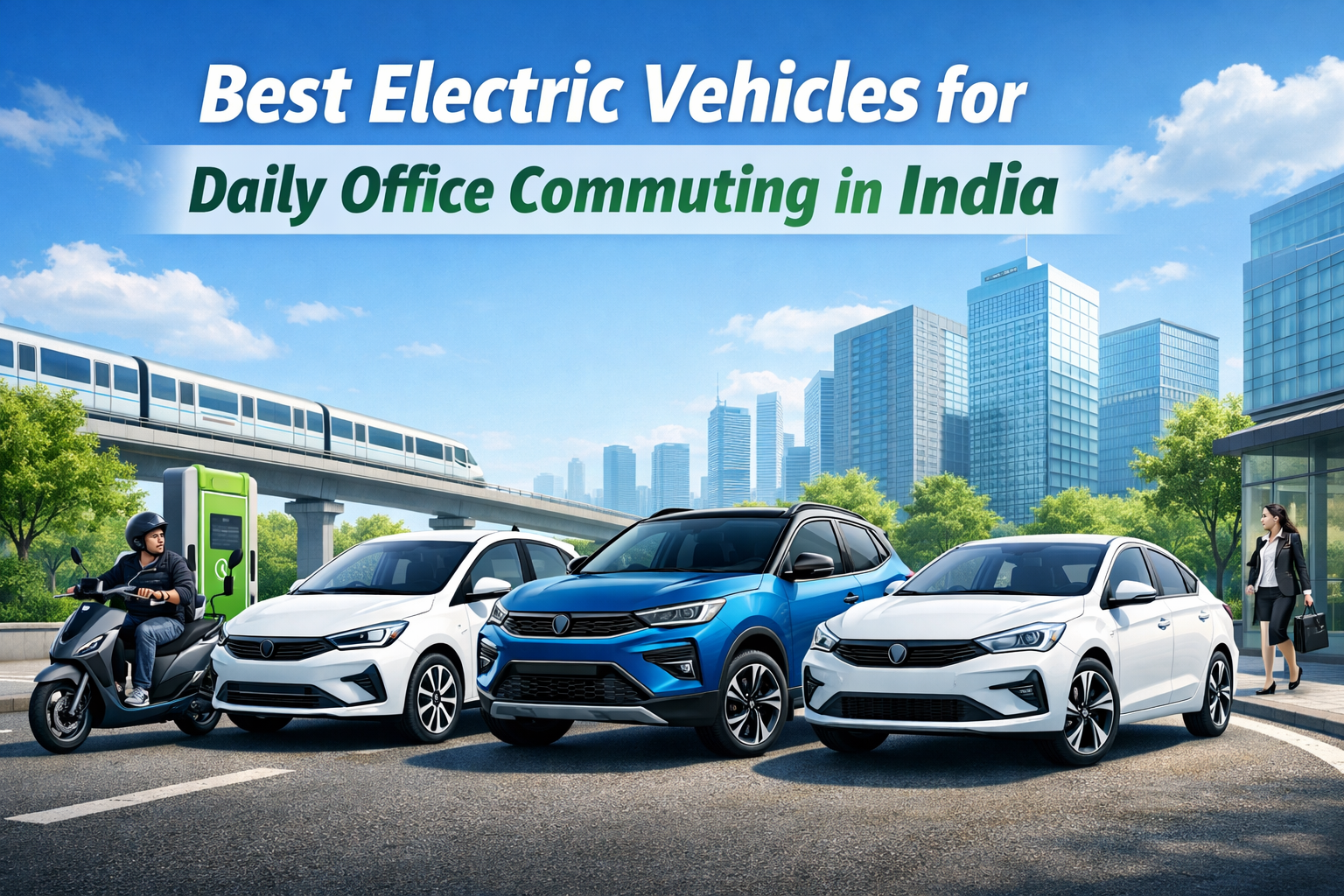
Best Electric Vehicles for Daily Office Commuting in India (2026 Guide)
By AdminFebruary 16, 20266 min read
Looking for the best electric vehicle for daily office commuting in India? Compare range, charging cost, comfort, savings, and top EV options for urban professionals in 2026.