The debate around electric vehicles versus petrol cars in India is no longer about performance or style. It is about money. With petrol prices hovering around ₹95–₹105 per litre in most major cities and electricity tariffs ranging between ₹6–₹9 per unit for residential consumers, Indian car buyers are asking a simple question: which option actually saves more over time? This detailed EV vs petrol cost comparison breaks down cost per kilometre, monthly running expenses, 5-year ownership cost, maintenance differences, government incentives, hidden expenses, and long-term savings projections based on Indian market data. If you are considering switching to an electric vehicle, understanding the real numbers is the first step toward making an informed decision. Cost Per Kilometer: EV vs Petrol in India The easiest way to compare electric and petrol vehicles is to calculate the running cost per kilometre. Petrol Car Calculation Average petrol car mileage: 15 km per litre Average petrol price in India (Jan 2026, Indian Oil retail data): ₹100 per litre (approximate national average) Cost per km = ₹100 ÷ 15 = ₹6.6 per km Electric Vehicle Calculation Average EV consumption: 0.15 kWh per km Average residential electricity tariff (Ministry of Power 2025 report): ₹8 per unit (kWh) Cost per km = 0.15 × ₹8 = ₹1.2 per km That means an EV can cost nearly five times less per kilometre compared to a petrol car when charged at home. For someone driving 1,000 km per month, this difference becomes substantial. Monthly Running Cost Comparison Let’s take a realistic urban usage example. Monthly distance driven: 1,000 km Petrol car monthly fuel cost: 1,000 × ₹6.6 = ₹6,600 EV monthly charging cost (home charging): 1,000 × ₹1.2 = ₹1,200 Monthly savings: ₹5,400 Annual savings: ₹64,800 Over five years, fuel savings alone could exceed ₹3 lakh, depending on driving habits and fuel price trends. This is where the EV vs petrol cost debate becomes more practical rather than theoretical. 5-Year Ownership Cost Comparison Running cost is only one part of the picture. Ownership cost includes fuel/charging, maintenance, insurance, and depreciation. Below is a simplified 5-year comparison for a mid-range vehicle category: Fuel/Charging Cost (5 years, 12,000 km annually) Petrol: 12,000 × ₹6.6 × 5 = ₹3,96,000 EV: 12,000 × ₹1.2 × 5 = ₹72,000 Estimated fuel savings over 5 years: ₹3,24,000 Maintenance Costs Petrol cars require: Engine oil changes every 8,000–10,000 km Clutch replacement (manual variants) Exhaust system repairs Fuel system cleaning Timing belt replacements EVs do not have: Engine oil Clutch Gearbox complexity Exhaust systems According to multiple Indian service network disclosures, EV maintenance costs can be 30–50% lower over five years compared to petrol cars. Estimated 5-year maintenance: Petrol: ₹60,000–₹1,00,000 EV: ₹30,000–₹50,000 Total 5-year ownership difference becomes even wider when maintenance savings are added. Upfront Cost Difference One of the biggest concerns is the initial price of EVs. EVs are often ₹1–2 lakh more expensive upfront compared to petrol variants in the same segment. However, this gap has reduced significantly due to: State subsidies under EV policies Road tax exemptions in several states Lower registration charges Reduced GST on EVs (5% vs 28% on petrol vehicles) When you factor in 5-year fuel savings of over ₹3 lakh, the higher upfront cost often balances out within 3–4 years for moderate to high usage drivers. Charging Cost: Home vs Public Charging Most EV owners charge their vehicles at home. Home Charging Residential tariff: ₹6–₹9 per unit Full charge (40 kWh battery): ₹240–₹360 Range: 250–300 km Cost per km: ₹0.8–₹1.4 Public Fast Charging Tariff: ₹15–₹25 per unit Full charge: ₹600–₹1,000 Public charging is more expensive but still competitive compared to petrol. For drivers relying mostly on home charging, EV vs petrol cost advantage remains strong. Impact of Fuel Price Inflation Petrol prices are historically volatile and influenced by global crude oil markets, taxation policies, and currency fluctuations. Electricity tariffs, while subject to regulatory changes, have historically increased at a slower and more stable rate compared to fuel prices. Over a 10-year horizon, fuel inflation can significantly widen the cost gap in favour of EVs. Battery Replacement Reality A common concern in EV ownership discussions is battery replacement cost. Most EV manufacturers in India offer: 8-year battery warranty 1,60,000 km coverage (varies by brand) Battery degradation over time is gradual. Replacement costs can range from ₹4–8 lakh depending on battery capacity, but real-world replacement cases within warranty periods remain limited. For most owners, the battery is unlikely to require replacement within the first 8 years. Resale Value Comparison Resale trends are evolving. Petrol vehicles have historically maintained predictable resale value. EV resale market is still maturing, but demand for used EVs is increasing due to: Lower running cost appeal Rising fuel prices Improved battery confidence Resale impact depends on battery health and brand reputation. Environmental Cost Consideration While this article focuses on financial comparison, it is worth noting that EVs produce zero tailpipe emissions. According to NITI Aayog reports, even considering India’s grid mix, EVs contribute to lower lifetime emissions compared to internal combustion engine vehicles. For environmentally conscious buyers, cost savings align with sustainability benefits. When Is Petrol Still a Better Option? EV vs petrol cost comparison may not favour EVs in every situation. Petrol vehicles may still be suitable if: Annual driving is very low (below 6,000 km) No access to home charging Frequent long-distance highway driving Budget constraints prevent higher upfront cost For high-mileage urban commuters, EV economics are significantly stronger. Featured Snippet: Quick Summary Is EV cheaper than petrol in India? Yes, for moderate to high usage drivers, EVs can save over ₹3 lakh in 5 years. What is EV cost per km in India? Approximately ₹1–₹1.5 per km with home charging. What is petrol car cost per km? Around ₹6–₹7 per km based on ₹100 per litre price. Do EVs have lower maintenance? Yes, due to fewer mechanical components. Final Verdict: Is EV Actually Cheaper? If you drive regularly and can charge at home, electric vehicles are financially more economical over a 5-year period compared to petrol cars in India. The cost advantage becomes stronger with: Higher monthly driving Rising fuel prices Access to residential charging Long-term ownership plans The EV vs petrol cost comparison in India is no longer speculative. The numbers clearly show that EVs offer lower running and maintenance expenses over time. Soft CTA If you are evaluating your next car purchase, explore our in-depth EV cost guides and ownership insights to make a financially informed decision. About the Author This analysis is prepared by the [Your Brand Name] Automotive Research Team, focused on Indian EV market trends, ownership cost modelling, and mobility economics. Data Sources Indian Oil Retail Petrol Price Data (January 2026) Ministry of Power India Electricity Tariff Report 2025 NITI Aayog EV Adoption and Emissions Studies Manufacturer warranty disclosures (public domain) Disclaimer All prices and calculations are based on average Indian market data and may vary depending on city, driving conditions, electricity tariffs, and vehicle model. This article is intended for informational purposes only and does not constitute financial or purchasing advice.
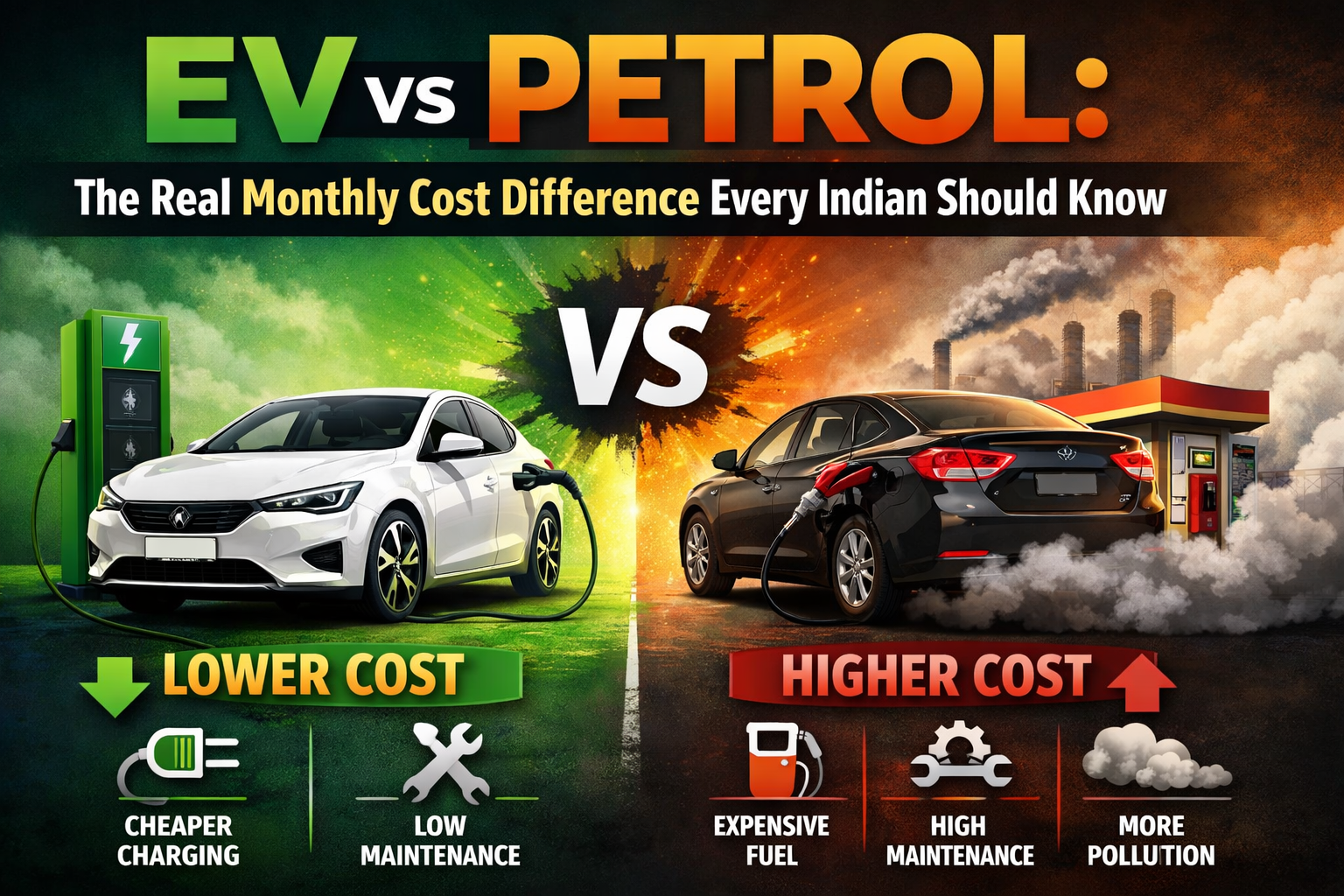
EV vs Petrol: The Real Monthly Cost Difference Every Indian Should Know
By AdminFebruary 1, 20266 min read
Electric vs Petrol—what’s the real monthly cost? From fuel and charging expenses to maintenance, servicing, and hidden savings, this comparison breaks down what Indian car owners actually spend each month. Discover which option truly saves money in daily use, not just on paper.