Electric vehicles are widely promoted as cost-saving alternatives to petrol vehicles, and in many cases, that is accurate. Lower fuel expenses and reduced maintenance requirements make EV ownership financially attractive for urban drivers. However, like any major purchase, EV ownership in India includes certain additional costs that buyers should understand clearly. These costs are not deal-breakers, but ignoring them can create unrealistic expectations. Being aware of these expenses does not diminish the benefits of EVs. Instead, it ensures transparency and helps buyers make informed financial decisions. Let’s examine the hidden costs of electric vehicles in India that are often overlooked. 1. Home Charging Installation Cost One of the first additional expenses most EV buyers encounter is charger installation. While some EVs can technically be charged using a standard 15A household socket, many owners prefer installing a dedicated wall-mounted charger for: Faster charging Electrical safety Convenience Warranty compliance Installation Cost in India Home charger installation cost typically ranges between: ₹20,000 to ₹50,000 The final amount depends on: Wiring distance from meter to parking area Electrical load capacity Required MCB or safety upgrades Civil work (if needed) Individual Houses vs Apartments In independent homes, installation is usually straightforward. In apartment complexes, buyers may need: Housing society approval Dedicated parking allocation Load capacity verification Additional cabling permissions While this process may require coordination, it is typically a one-time effort. Over long-term ownership, this upfront cost becomes negligible compared to fuel savings. 2. Higher Initial Insurance Premium Insurance is another area where buyers notice a difference. EV insurance premiums can sometimes be slightly higher in the first year due to: Higher ex-showroom vehicle price Battery coverage inclusion Limited historical risk data However, this premium gap is gradually narrowing as: EV adoption increases Insurance companies gain better actuarial data Repair networks expand Many insurers now offer dedicated EV insurance policies, improving cost transparency. Over 5–8 years, insurance differences typically remain moderate and do not offset fuel savings. 3. Public Fast Charging Cost Public fast charging is often misunderstood. Fast chargers typically cost: ₹15 to ₹25 per unit This is significantly higher than residential electricity tariffs (₹6–₹9 per unit). The higher rate reflects: Infrastructure setup cost Commercial electricity tariffs Maintenance expenses Land rental However, most EV owners do not rely on fast charging daily. It is mainly used for: Long-distance travel Occasional top-ups Emergency situations For regular city commuting, home charging remains the primary method. When spread across total monthly usage, public charging adds only a small percentage to overall cost. 4. Tyre Wear Considerations Electric vehicles deliver instant torque. This can result in slightly higher tyre wear in certain models, especially if: Driven aggressively Frequently accelerated rapidly Used in stop-and-go traffic However, driving style plays a major role. Responsible driving habits minimize excess wear. Additionally, regenerative braking in EVs can reduce brake pad wear compared to petrol cars. Overall, tyre costs are not drastically higher but may require mindful driving. 5. Software Subscriptions and Connected Features Modern EVs often include: Connected car technology Real-time navigation Remote monitoring apps Advanced driver assistance systems Some manufacturers offer: Optional subscription-based features Premium connectivity plans Extended digital services These are not mandatory expenses but can enhance user experience. Buyers should check: Which features are included permanently Which require annual renewal What costs apply after trial periods Understanding these details avoids unexpected recurring charges. 6. Electrical Load Upgrade (Occasional Scenario) In older buildings or apartments, electrical load capacity may need upgrading. This could involve: Increasing sanctioned load Upgrading meter capacity Paying minor utility fees Such upgrades are not required in all cases but should be verified before purchase. This remains a one-time administrative cost rather than a recurring expense. 7. Parking Infrastructure Adjustments Some EV owners in apartment complexes may incur minor costs for: Cable routing Protective casing Parking space modification These are situational and depend on housing design. Again, these are typically one-time expenses. Are These Hidden Costs Significant? When viewed individually, these costs may seem noticeable. However, when evaluated across 5–8 years of ownership: Fuel savings often exceed ₹3–₹5 lakh Maintenance savings add further benefit Government incentives reduce initial burden Even after accounting for: Charger installation Slightly higher insurance Occasional fast charging Minor infrastructure adjustments EVs generally remain financially advantageous for regular city drivers Quick Summary (Featured Snippet Optimized) What are the hidden costs of electric vehicles in India? Home charger installation, slightly higher insurance premiums, public fast charging rates, optional software subscriptions, and possible electrical upgrades. Is EV insurance expensive? It can be slightly higher initially but is narrowing as the market matures. Is fast charging costly? Yes, more than home charging, but it is rarely used daily. Do hidden costs cancel EV savings? No. Over long-term ownership, EVs remain cost-effective for regular urban drivers. Long-Term Financial Perspective The biggest financial difference between EVs and petrol vehicles lies in recurring expenses. Petrol vehicles incur: Continuous fuel costs Increasing maintenance costs with age Higher mechanical wear EVs incur: Lower charging costs Fewer mechanical repairs Predictable energy pricing The hidden costs discussed above are primarily one-time or occasional. When compared to monthly fuel savings, their financial impact becomes relatively small. Transparency Builds Better Decisions Understanding hidden costs ensures buyers enter EV ownership with realistic expectations. Electric vehicles are not magically cost-free. But neither are petrol vehicles. A transparent comparison helps avoid disappointment and builds long-term satisfaction. Even after accounting for additional expenses, EVs generally remain financially sensible for: Daily commuters Urban professionals Families with predictable driving patterns Final Verdict The hidden costs of electric vehicles in India exist — but they are manageable, mostly one-time, and transparent when evaluated properly. Home charger installation, minor insurance differences, occasional fast charging, and optional digital features do not outweigh the long-term savings from reduced fuel and maintenance expenses. For regular city drivers, EV ownership continues to offer strong financial and operational advantages — even after factoring in the costs that are not always discussed openly. Before switching to electric, explore our complete EV ownership guide series to understand charging, maintenance, battery life, and long-term cost comparison in detail. Data References Ministry of Power India – Electricity Tariff Data (2026) IRDAI Insurance Market Data (India) Public Charging Network Tariff Disclosures Manufacturer Installation Guidelines (India) Disclaimer Costs vary based on state regulations, electricity tariffs, housing type, driving habits, and vehicle model. The figures mentioned are general market estimates for informational purposes only.
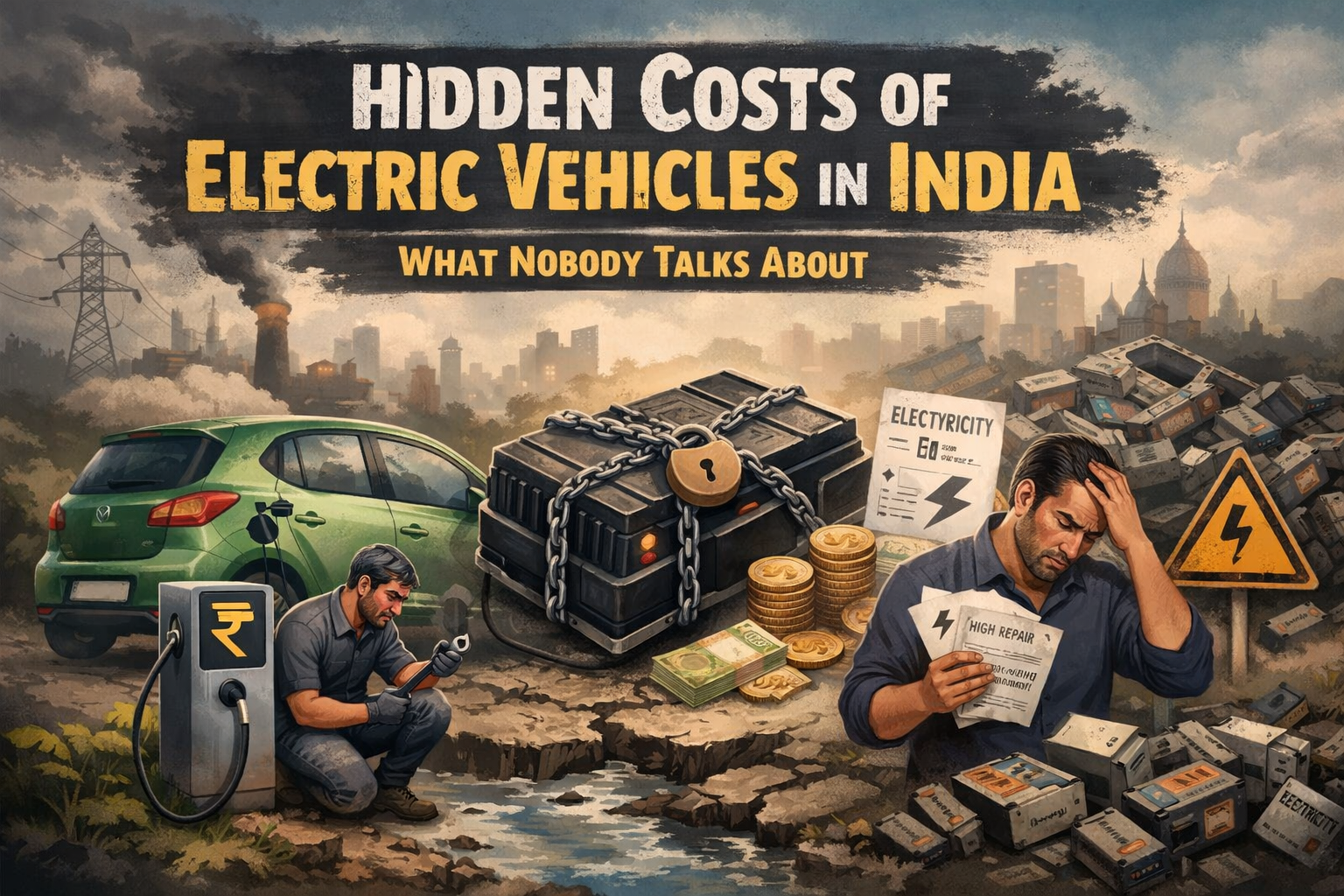
Hidden Costs of Electric Vehicles in India: What Nobody Talks About
By AdminFebruary 13, 20266 min read
Discover the hidden costs of electric vehicles in India including home charger installation, insurance premiums, tyre wear, fast charging rates, and subscription features.