At first glance, electric vehicles in India often appear expensive. When buyers walk into a showroom and compare prices, the electric variant usually carries a higher sticker price than a similar petrol model. This initial difference naturally creates hesitation. Many people assume that EVs are still a premium choice meant only for early adopters or environmentally conscious buyers. However, judging affordability only by the purchase price can be misleading. The true cost of owning a vehicle reveals itself over years, not on the day of purchase. To understand whether buying an electric vehicle in India is actually cheaper in the long run, we need to examine fuel expenses, maintenance, battery reliability, government incentives, and resale value over a realistic ownership period. Understanding the Real Cost of Vehicle Ownership When evaluating long-term affordability, ownership cost must include: Fuel or charging expenses Maintenance and servicing Repairs and component replacement Government taxes and incentives Depreciation and resale value Most buyers focus only on the upfront price difference between EVs and petrol cars. But in reality, running costs over five to eight years often exceed the initial purchase gap. Petrol Vehicle Long-Term Cost Breakdown A petrol vehicle comes with a long-term commitment to fuel expenses that continue month after month. If an average urban driver spends ₹8,000 to ₹9,000 per month on petrol, that amounts to nearly ₹1 lakh per year. Over five years, fuel expenditure alone becomes approximately ₹5 to ₹6 lakh. This calculation assumes relative price stability. Historically, however, petrol prices in India are influenced by: Global crude oil markets Government taxation policies Currency exchange fluctuations This means fuel prices can increase unexpectedly, impacting household budgets immediately. Maintenance Cost of Petrol Cars Petrol vehicles rely on internal combustion engines with numerous moving parts that experience wear and tear over time. Regular servicing includes: Engine oil replacement Oil and air filter changes Spark plug replacement Clutch plate servicing Belt and gasket replacement As vehicles age, repair probability increases. A three-year-old petrol car is generally less expensive to maintain than a seven-year-old one. Over five years, cumulative servicing and repair expenses can easily range between ₹70,000 and ₹1 lakh depending on usage, brand, and service network. Electric Vehicle Cost Structure in India Electric vehicles follow a completely different financial pattern. While the upfront purchase price may be slightly higher, the running cost is dramatically lower due to affordable electricity tariffs. EV Charging Cost Advantage Residential electricity tariffs in India typically range between ₹6 to ₹9 per unit depending on the state (Ministry of Power reports). If an EV costs approximately ₹1,500 per month to charge compared to ₹8,000 spent on petrol, the annual savings exceed ₹75,000. Over five years, fuel savings alone can reach nearly ₹4 lakh. This single factor significantly shifts the EV vs petrol long-term cost equation. Lower Maintenance Burden in Electric Vehicles EVs do not require: Engine oil changes Clutch replacements Complex gearbox repairs Exhaust system maintenance Electric motors have far fewer moving parts than internal combustion engines, reducing mechanical wear. As a result, servicing frequency is lower and overall maintenance costs are typically 30–50% lower compared to petrol vehicles over five years. For long-term owners, this translates into predictable and reduced annual service expenses. Battery Cost: Myth vs Reality Battery replacement cost is often cited as the biggest concern when evaluating whether buying an electric vehicle in India is cheaper in the long run. Modern EVs in India typically offer: 8-year battery warranty Up to 1.6 lakh kilometre coverage (varies by manufacturer) Battery degradation occurs gradually rather than suddenly. Performance reduces slowly over time rather than failing abruptly. For most urban drivers who plan to use their vehicle for five to seven years, battery replacement is unlikely to become a major financial burden during that ownership period. While long-term battery replacement costs can be significant, warranty coverage and gradual degradation reduce immediate financial risk. Government Incentives Reduce Upfront Cost Government policies further strengthen long-term affordability. Electric vehicles benefit from: Lower GST (5%) compared to higher rates on petrol vehicles Road tax exemptions in multiple states Registration fee waivers State-level subsidies These benefits narrow the initial price difference between EVs and petrol vehicles. When calculated realistically, the higher upfront cost of an EV often balances out within three to four years of regular usage. Resale Value and Future Market Trends Resale value is an important part of long-term cost evaluation. As India gradually shifts toward electric mobility and fuel prices remain high, demand for used EVs is increasing. Long battery warranties provide confidence to second-hand buyers. Meanwhile, older petrol vehicles may face: Stricter emission norms Registration renewal challenges in some regions Policy changes affecting internal combustion engines While the EV resale market is still developing, long-term demand trends indicate growing acceptance. 5–8 Year Cost Perspective When ownership costs are calculated over five to eight years, electric vehicles often emerge as the more economical option for consistent urban users. High-mileage drivers benefit the most. For daily commuters covering 800–1,200 km per month, long-term savings become substantial. If the vehicle is used frequently and home charging is available, the EV’s financial advantage strengthens considerably. Quick Summary (Featured Snippet Optimized) Is buying an electric vehicle in India cheaper in the long run? Yes, for regular urban drivers, EVs can save several lakh rupees over 5–8 years due to lower fuel and maintenance costs. Do EVs have lower maintenance costs? Yes, because they have fewer mechanical components and do not require engine oil changes or clutch repairs. Is battery replacement a major financial risk? Most EVs come with 8-year warranties, reducing short- to mid-term battery replacement concerns. How long does it take to recover the higher EV price? Typically 3–4 years with regular driving. Final Verdict The real affordability of an electric vehicle is not visible in the showroom; it becomes clear in monthly budgets and long-term savings. While EVs may require a slightly higher investment initially, their lower running cost, reduced maintenance burden, government incentives, and predictable electricity expenses make them financially sensible over time. For urban Indian users driving consistently every month, buying an electric vehicle in India is often cheaper in the long run. Data References Ministry of Power India – Residential Electricity Tariff Reports Indian Oil Retail Fuel Price Data (2026) Manufacturer Warranty Disclosures (Public Domain) Government of India GST Council Notifications Disclaimer All cost estimates are based on average Indian market data and may vary depending on city, electricity tariff, fuel price fluctuations, driving habits, and vehicle model. This article is intended for informational purposes only and should not be considered financial advice.
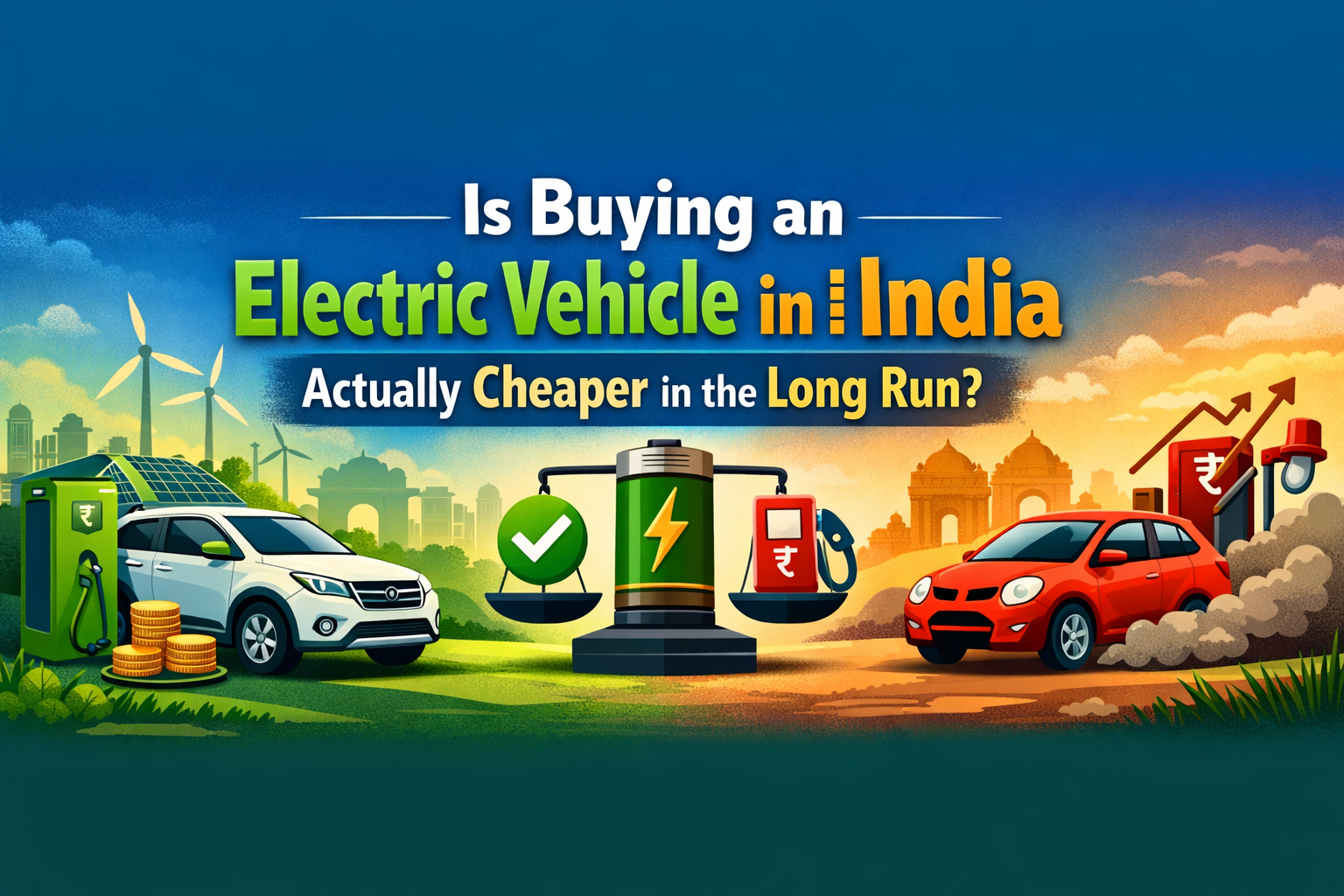
Is Buying an Electric Vehicle in India Actually Cheaper in the Long Run?
By AdminFebruary 6, 20266 min read